
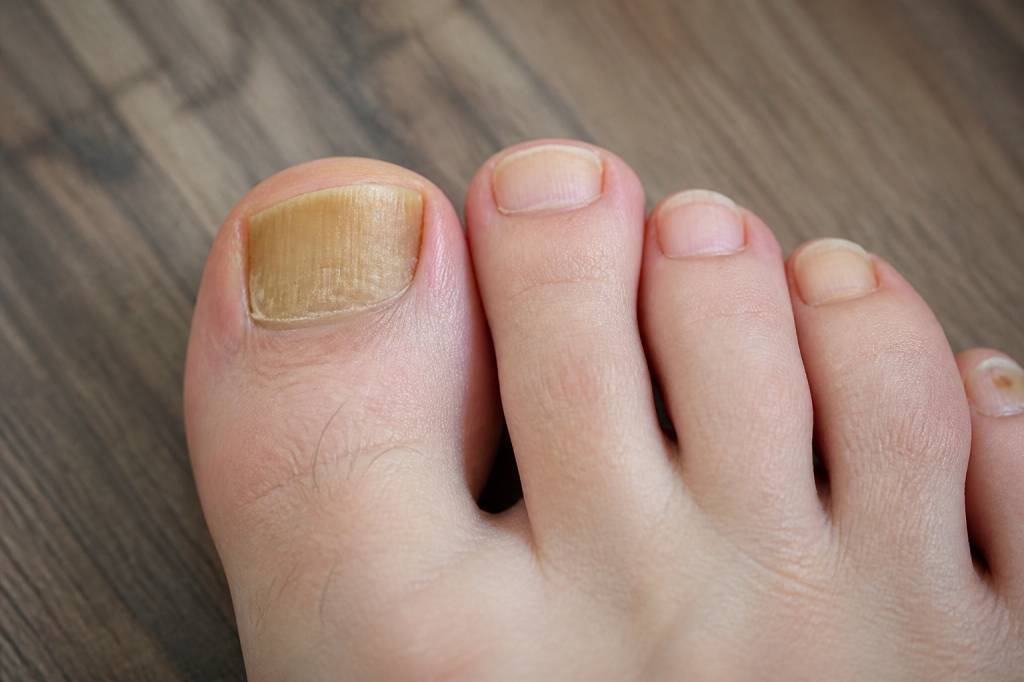
Why do toenails turn yellow?
Yellow toenails are common, and in many cases the cause is simple: something is staining the nail or changing how it grows. But sometimes yellowing is a clue that your nails are dealing with an infection, irritation, or an underlying health issue. The good news? Most causes are treatable once you know what you’re looking at.
If you’ve glanced down and wondered why one or more toenails look more like old candle wax than healthy nail tissue, you’re not alone. Toenails change slowly, which means problems often build up quietly. That also means small changes can be easy to miss until the discoloration becomes obvious.
Healthy toenails are usually smooth, slightly pink, and evenly shaped. When they turn yellow, they may also become thicker, brittle, crumbly, or lift away from the nail bed. The exact pattern matters, because it helps point to the cause.
Common causes of yellow toenails
There are several possible reasons your toenails may look yellow. Some are harmless and temporary. Others need treatment to avoid getting worse.
Fungal nail infection
The most common cause is a fungal infection, also called onychomycosis. Fungi love warm, damp environments, which makes toes a perfect target, especially if your feet spend a lot of time in sweaty shoes, gym lockers, or shared showers.
Fungal nail infections often start small. You may notice a pale yellow spot near the tip of the nail that gradually spreads. Over time, the nail can thicken, become rough, and sometimes smell unpleasant. It may also become difficult to trim because the nail turns hard and brittle.
This is especially common if you:
Nail polish staining
Sometimes the culprit is far less dramatic: dark or red nail polish can stain the nail plate, especially if a base coat wasn’t used. This usually affects multiple toenails in a fairly even way and doesn’t come with thickening or crumbling.
If your toenails look yellow after a long stretch of polish wear, remove the colour and give your nails a few weeks. A healthy nail can slowly grow out the stain. Think of it as your nail’s version of a reset button.
Smoking
Nicotine can stain nails and the skin around them, causing a yellowish tint. This is more likely to show up on the fingertips, but toenails can also be affected, especially if tobacco exposure is frequent. The staining itself is usually not dangerous, but it can be a visible sign that your body is being exposed to something harmful.
Age-related changes
As we get older, nails can naturally become thicker, more brittle, and discoloured. This is partly because nail growth slows and partly because years of minor trauma, pressure, and exposure add up. Age-related yellowing is usually mild, but it can make the nail look dull or slightly opaque.
Repeated pressure or trauma
If you run, hike, play sports, or wear shoes that squeeze the toes, repeated micro-trauma can change the nail’s appearance. The nail may become yellow, thickened, or develop ridges. In some cases, the nail bed can separate slightly from the nail, trapping debris and creating a yellowish look.
This is a classic example of “small but repeated” damage. One long walk probably won’t do it, but months of pressure certainly can. Your toenails remember your footwear even if you don’t.
Medical conditions that can affect toenail colour
Sometimes yellow toenails are connected to a broader health issue rather than a problem with the nail itself. These cases are less common, but worth knowing about.
Psoriasis
Psoriasis can affect the nails and cause yellow-brown discolouration, pitting, thickening, or separation from the nail bed. Nail psoriasis doesn’t always look dramatic on the skin, so some people are surprised when the nails are the first clue.
Diabetes
People with diabetes have a higher risk of foot problems, including fungal infections and slower healing. Poor circulation and nerve changes can make it easier for small nail issues to go unnoticed until they become more obvious. Yellow nails in this context may be a sign that the foot needs a closer look.
Lung disease or lymphatic problems
In rare cases, yellow nails can be associated with conditions such as chronic respiratory illness or lymphatic disorders. A condition called yellow nail syndrome can cause thickened, slow-growing yellow nails along with swelling and respiratory symptoms. This is not the most likely explanation, but it matters if the nail changes come with other health concerns.
Symptoms that may accompany yellow toenails
The colour change alone does not tell the whole story. Pay attention to what else is happening. The combination of symptoms often gives the best clue.
Yellow toenails may also be accompanied by:
If you also have athlete’s foot, that’s a strong clue that a fungal infection could be involved. The fungus often starts on the skin and then spreads to the nail. Sneaky, but predictable.
When yellow toenails are more likely to be fungal
Not every yellow nail is fungal, but several signs make infection more likely. Fungal nails often change slowly and usually start at the tip or side of the nail before moving inward. The nail may become thick, crumbly, and harder to cut. In some cases, the nail lifts slightly and debris collects underneath.
One useful detail: fungal infections tend to affect one or a few nails more than all of them equally. If every toenail is turning yellow in a similar way, staining or a systemic cause may be more likely.
How yellow toenails are diagnosed
If the cause isn’t obvious, a doctor or podiatrist may examine the nail and ask about your symptoms, footwear, exercise habits, and medical history. If a fungal infection is suspected, they may take a small nail sample and send it for testing. This helps confirm the diagnosis before treatment begins.
That step matters because not every thick or yellow nail is fungal. Treating the wrong problem wastes time, and nail conditions are slow enough already without guesswork.
Treatment options for yellow toenails
Treatment depends on the cause. Some cases need medication, while others improve with better nail care, footwear changes, or simply giving the nail time to grow out.
Antifungal treatments
If a fungal infection is confirmed or strongly suspected, antifungal treatment is often the main option. This may include:
Topical treatments are usually better for mild or early cases, but they can take months to work because toenails grow slowly. Oral medications tend to be more effective for severe infections, though they may not be suitable for everyone and can require medical monitoring.
It’s important to follow the treatment plan consistently. Stopping early because “it looks better” is a common mistake. Nails often improve from the base outward, so visible progress can lag behind the actual healing process.
Foot hygiene and nail care
Good foot care won’t cure every cause, but it can make a big difference, especially if fungus or staining is involved. Keep feet clean and dry, and dry carefully between the toes after washing. Trim nails straight across and avoid cutting them too short.
Useful habits include:
Managing nail staining
If polish staining is the issue, the fix is simple: stop using dark polish for a while, use a protective base coat in future, and let the stain grow out. A gentle nail buffer may improve the appearance a little, but avoid over-buffing, since that can thin the nail and make it more vulnerable.
Addressing underlying conditions
If yellow toenails are linked to psoriasis, diabetes, circulation issues, or another health condition, treating the root cause is essential. Nail symptoms may improve once the broader condition is better controlled. For example, people with diabetes may need foot checks, blood sugar management, and professional nail care if trimming is difficult.
What you can do at home
Home care is useful, but it has limits. You can support healthier nails by keeping them dry, avoiding tight shoes, and being patient while the nail grows out. Toenails grow slowly, so even a healthy nail can take many months to fully replace itself.
Try to avoid these common traps:
If you suspect fungus, over-the-counter treatments may help with mild skin infections, but nail infections are often tougher to clear. If you have diabetes, poor circulation, or a weakened immune system, it’s better to get advice before trying to self-treat.
When to see a doctor
It’s worth getting medical advice if the yellowing does not improve, seems to be spreading, or is affecting multiple nails. You should also seek help if the nail is painful, swollen, lifting off the bed, or has a strong odour. These signs may indicate a more advanced infection or another issue that needs proper assessment.
See a healthcare professional sooner if you have:
How to prevent yellow toenails
Prevention is mostly about reducing moisture, pressure, and exposure to infection. A few small changes can go a long way.
Helpful prevention tips include:
If you’re active, especially in the gym or on the running track, foot care should be part of your routine, not an afterthought. Healthy feet are easier to maintain than to rescue later.
A simple way to think about yellow toenails
Yellow toenails are usually a sign, not a diagnosis. Sometimes they’re stained, sometimes they’re infected, and sometimes they’re pointing to a bigger health issue. The pattern of colour change, the texture of the nail, and any other symptoms all matter.
If the change is mild and clearly linked to nail polish or minor trauma, it may improve with basic care and time. If the nail is thick, crumbly, spreading, or painful, it’s time to look deeper. Your toenails may not be the most glamorous part of your health, but they can be surprisingly informative. And unlike a bad mood, a yellow nail usually has a fix.